
/** * WP_oEmbed_Controller class, used to provide an oEmbed endpoint. * * @package WordPress * @subpackage Embeds * @since 4.4.0 */ /** * oEmbed API endpoint controller. * * Registers the REST API route and delivers the response data. * The output format (XML or JSON) is handled by the REST API. * * @since 4.4.0 */ #[AllowDynamicProperties] final class WP_oEmbed_Controller { /** * Register the oEmbed REST API route. * * @since 4.4.0 */ public function register_routes() { /** * Filters the maxwidth oEmbed parameter. * * @since 4.4.0 * * @param int $maxwidth Maximum allowed width. Default 600. */ $maxwidth = apply_filters( 'oembed_default_width', 600 ); register_rest_route( 'oembed/1.0', '/embed', array( array( 'methods' => WP_REST_Server::READABLE, 'callback' => array( $this, 'get_item' ), 'permission_callback' => '__return_true', 'args' => array( 'url' => array( 'description' => __( 'The URL of the resource for which to fetch oEmbed data.' ), 'required' => true, 'type' => 'string', 'format' => 'uri', ), 'format' => array( 'default' => 'json', 'sanitize_callback' => 'wp_oembed_ensure_format', ), 'maxwidth' => array( 'default' => $maxwidth, 'sanitize_callback' => 'absint', ), ), ), ) ); register_rest_route( 'oembed/1.0', '/proxy', array( array( 'methods' => WP_REST_Server::READABLE, 'callback' => array( $this, 'get_proxy_item' ), 'permission_callback' => array( $this, 'get_proxy_item_permissions_check' ), 'args' => array( 'url' => array( 'description' => __( 'The URL of the resource for which to fetch oEmbed data.' ), 'required' => true, 'type' => 'string', 'format' => 'uri', ), 'format' => array( 'description' => __( 'The oEmbed format to use.' ), 'type' => 'string', 'default' => 'json', 'enum' => array( 'json', 'xml', ), ), 'maxwidth' => array( 'description' => __( 'The maximum width of the embed frame in pixels.' ), 'type' => 'integer', 'default' => $maxwidth, 'sanitize_callback' => 'absint', ), 'maxheight' => array( 'description' => __( 'The maximum height of the embed frame in pixels.' ), 'type' => 'integer', 'sanitize_callback' => 'absint', ), 'discover' => array( 'description' => __( 'Whether to perform an oEmbed discovery request for unsanctioned providers.' ), 'type' => 'boolean', 'default' => true, ), ), ), ) ); } /** * Callback for the embed API endpoint. * * Returns the JSON object for the post. * * @since 4.4.0 * * @param WP_REST_Request $request Full data about the request. * @return array|WP_Error oEmbed response data or WP_Error on failure. */ public function get_item( $request ) { $post_id = url_to_postid( $request['url'] ); /** * Filters the determined post ID. * * @since 4.4.0 * * @param int $post_id The post ID. * @param string $url The requested URL. */ $post_id = apply_filters( 'oembed_request_post_id', $post_id, $request['url'] ); $data = get_oembed_response_data( $post_id, $request['maxwidth'] ); if ( ! $data ) { return new WP_Error( 'oembed_invalid_url', get_status_header_desc( 404 ), array( 'status' => 404 ) ); } return $data; } /** * Checks if current user can make a proxy oEmbed request. * * @since 4.8.0 * * @return true|WP_Error True if the request has read access, WP_Error object otherwise. */ public function get_proxy_item_permissions_check() { if ( ! current_user_can( 'edit_posts' ) ) { return new WP_Error( 'rest_forbidden', __( 'Sorry, you are not allowed to make proxied oEmbed requests.' ), array( 'status' => rest_authorization_required_code() ) ); } return true; } /** * Callback for the proxy API endpoint. * * Returns the JSON object for the proxied item. * * @since 4.8.0 * * @see WP_oEmbed::get_html() * @global WP_Embed $wp_embed WordPress Embed object. * @global WP_Scripts $wp_scripts * * @param WP_REST_Request $request Full data about the request. * @return object|WP_Error oEmbed response data or WP_Error on failure. */ public function get_proxy_item( $request ) { global $wp_embed, $wp_scripts; $args = $request->get_params(); // Serve oEmbed data from cache if set. unset( $args['_wpnonce'] ); $cache_key = 'oembed_' . md5( serialize( $args ) ); $data = get_transient( $cache_key ); if ( ! empty( $data ) ) { return $data; } $url = $request['url']; unset( $args['url'] ); // Copy maxwidth/maxheight to width/height since WP_oEmbed::fetch() uses these arg names. if ( isset( $args['maxwidth'] ) ) { $args['width'] = $args['maxwidth']; } if ( isset( $args['maxheight'] ) ) { $args['height'] = $args['maxheight']; } // Short-circuit process for URLs belonging to the current site. $data = get_oembed_response_data_for_url( $url, $args ); if ( $data ) { return $data; } $data = _wp_oembed_get_object()->get_data( $url, $args ); if ( false === $data ) { // Try using a classic embed, instead. /* @var WP_Embed $wp_embed */ $html = $wp_embed->get_embed_handler_html( $args, $url ); if ( $html ) { // Check if any scripts were enqueued by the shortcode, and include them in the response. $enqueued_scripts = array(); foreach ( $wp_scripts->queue as $script ) { $enqueued_scripts[] = $wp_scripts->registered[ $script ]->src; } return (object) array( 'provider_name' => __( 'Embed Handler' ), 'html' => $html, 'scripts' => $enqueued_scripts, ); } return new WP_Error( 'oembed_invalid_url', get_status_header_desc( 404 ), array( 'status' => 404 ) ); } /** This filter is documented in wp-includes/class-wp-oembed.php */ $data->html = apply_filters( 'oembed_result', _wp_oembed_get_object()->data2html( (object) $data, $url ), $url, $args ); /** * Filters the oEmbed TTL value (time to live). * * Similar to the {@see 'oembed_ttl'} filter, but for the REST API * oEmbed proxy endpoint. * * @since 4.8.0 * * @param int $time Time to live (in seconds). * @param string $url The attempted embed URL. * @param array $args An array of embed request arguments. */ $ttl = apply_filters( 'rest_oembed_ttl', DAY_IN_SECONDS, $url, $args ); set_transient( $cache_key, $data, $ttl ); return $data; } } Get Ready for the Chicken Road Race A Clucking Good Time! -

Get Ready for the Chicken Road Race A Clucking Good Time!

The Exciting World of Chicken Road Race

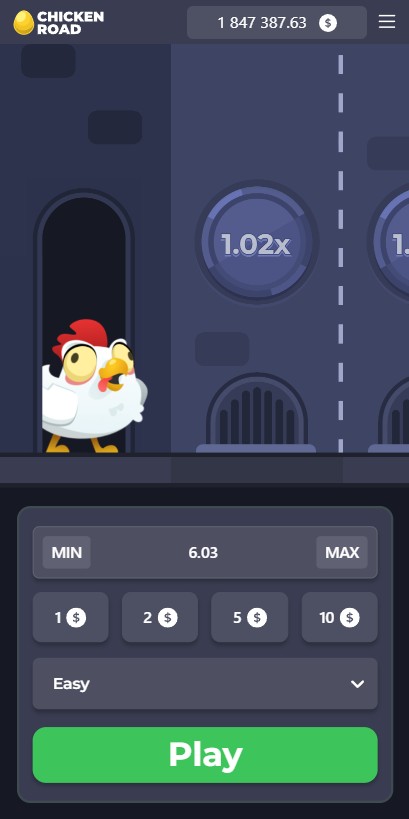
In a world where poultry take center stage, the chicken road race slot is taking flight! This unique and amusing event has garnered attention from enthusiasts and casual spectators alike. Whether you’re a die-hard fan or just someone looking for a good time, the chicken road race promises to be a memorable experience filled with laughter, surprises, and, of course, a showcase of some feisty fowls. Let’s dive into what makes this race so special!

What is the Chicken Road Race?

The Chicken Road Race is a fun and unconventional competition where participants train their chickens to race in a variety of courses. These events can vary in distance, obstacles, and even themes, making each competition unique. The core idea is simple: the fastest chicken wins!

History of Chicken Racing

Chicken racing may seem like a novelty today, but it has roots that stretch back centuries. Traditionally, many cultures have used chickens in their celebrations and competitions. In the United States, particularly in rural areas, chicken racing has gained popularity as a jovial event that brings communities together. These races can be festive occasions complete with music, food, and activities for the whole family.

Preparing Your Chicken for the Race

Training a chicken for a road race is not as simple as it may sound. It requires dedication, patience, and a good understanding of your feathery contestant’s abilities. Here’s a basic outline of how aspiring chicken owners embark on this clucking challenge:

Choosing the Right Breed

Not all chickens are cut out for racing. Breeds such as the White Leghorn and Rhode Island Reds are known for their speed and agility. Selecting a breed that has a natural affinity for sprinting will give you a head start.

Training Regimen

Like any athlete, chickens require a structured training regimen to excel in racing. This includes:

  • Daily exercises to build stamina and strength.
  • Encouragement to run towards a prize (like food or a favorite treat).
  • Gradually increased race distances to prepare for competition.

Rules and Regulations

Every chicken racing event will have its own set of rules and regulations, which can include specifics about the type of race, the distance, and what is permissible during training (for instance, how much guidance the owner can provide during the race itself). Understanding these regulations is crucial for ensuring a fair and fun competition for all participants.

The Race Day Experience

Race day is an electrifying experience—not just for the racers but also for spectators. The atmosphere is often festive and upbeat, with vendors, games, and various entertainment options. Owners showcase their chickens, and even the audience gets involved, cheering for their favorites. Popular features of race day include:

  • Pre-race exhibitions and demonstrations.
  • Interactive booths for families.
  • Food stalls featuring local cuisine and chicken-themed treats.

Prizes and Glory

What’s a race without some friendly competition? Prizes can range from simple trophies to extravagant awards including cash prizes, chicken feed for a year, or even custom-designed gear for the winning chicken’s owner. Those who win often gain bragging rights and a place in the local history of chicken racing!

Community and Connections

One of the most delightful aspects of the chicken road race is the strong sense of community it fosters. This competition not only showcases animals but also builds connections among participants and spectators. Many owners form friendships through shared experiences and from the mutual love of raising chickens.

Conclusion: Why You Should Participate

Whether you’re looking to get involved as a participant or just seeking a new entertaining experience, the chicken road race is a clucking good time. It’s an event that celebrates not just speed but also community spirit, creativity, and a good dose of humor. So gather your friends and family and head out to your nearest chicken road race for an unforgettable day of fun, laughter, and fast birds!